
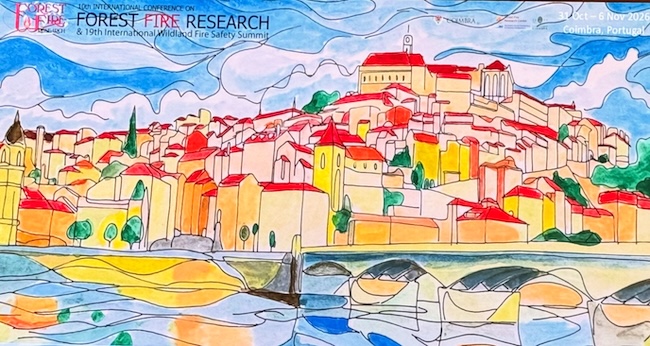
Od 31.listopada - 6. studenog 2026.g. u Coimbri Portugal održala se 10th International Conference on Forest Fire Research, konferencija posvećena istraživanjima požara raslinja koja se održava svake 4 godine i na kojoj se prezentiraju sva znanstvena saznanja vezana uz požare raslinja do kojih se došlo u protekle 4 godine. Zbornik radova konferencije s nazivom Advances in Forest Fire Research 2026 koji su uredili Domingos Xavier Viegas i Luís Mário Ribeiro je otvorenog tipa (Open Access) i množe se naći na adresi https://books.uc.pt/book?book=1537. U zborniku su radovi koji su rezultat doprinosa brojnih međunarodnih istraživača o pitanjima koja se odnose na požare raslinja od 2022.g. do 2026.g. Radovi su na engleskom jeziku podijeljeni u 6 tematskih područja:
Chapter 1 Fire at the Wildland Urban Interface
Chapter 2 New and emerging technologies
Chapter 3 Risk adaptation
Chapter 4 Risk assessment
Chapter 5 Risk reduction
Chapter 6 Wildfire management and safety
Na konferenciji su se predstavili i suradnici CIPOP-a sa 4 rada:
- Darko Stipaničev, Antonia Ivanda, Marin Bugarić, Ljiljana Šerić, Damir Krstinić, Canyon Detection for Eruptive Fire Early Warning System
- Antonia Ivanda, Ljiljana Šerić, Maja Braović, Darko Stipaničev, Damir Krstinić, Marin Bugarić, Fire weather index and machine learning approaches for distinguishing large wildfire events from contained interventions
- Ljiljana Šerić, Darko Stipaničev, Marin Bugarić, Damir Krstinić, Framework for FirEUrisk Assessments Validation Using Quantified Fire Suppression Effort – Case Study of island Brač Croatia
- Marin Bugarić, Ljiljana Šerić, Darko Stipaničev, Damir Krstinić, Antonia Ivanda, Spatial false alarm analytics: a framework for adaptive detection in PTZ wildfire surveillance networks
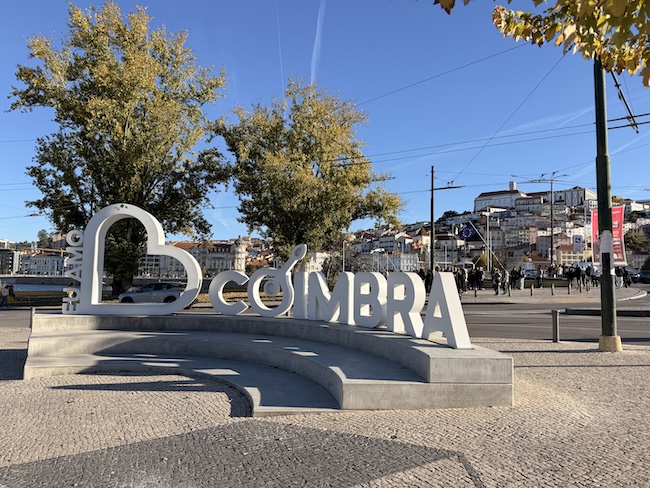
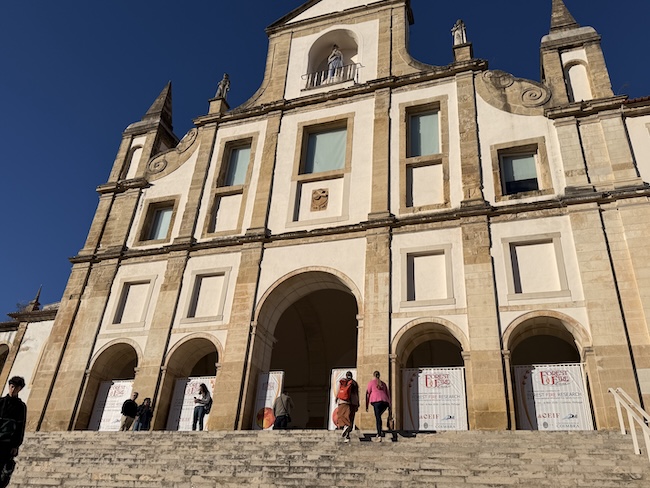
Lokacija kongresa je bio impresivno obnovljen napušteni franjevački samostan Convento de São Francisco Cultural and Congress Center, vjerojatno obnovljen sredstvima EU. Coimbra je grad veličine Splita i jedino što mogu žaliti da u Splitu nemamo ovakav kongresni centar.
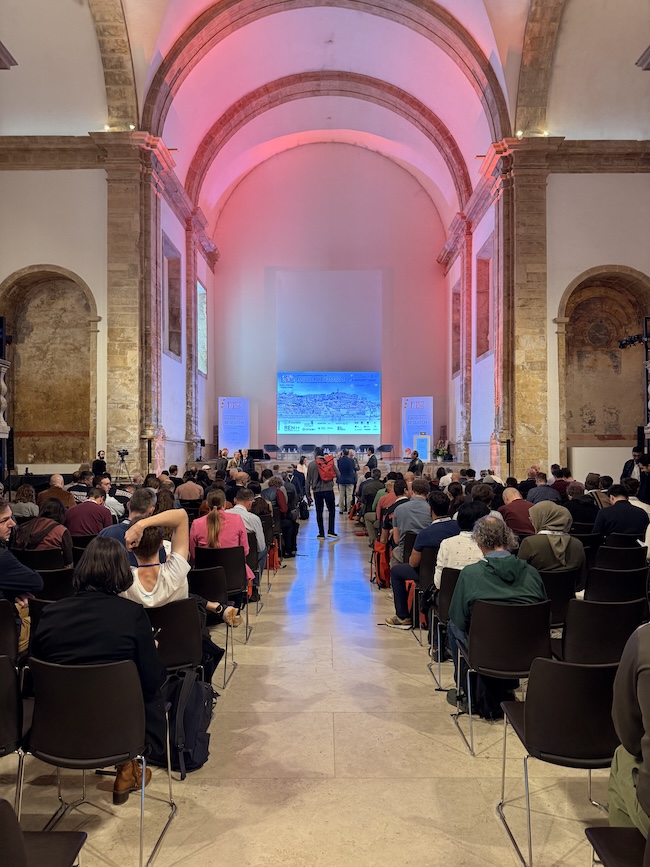
Centralna kongresna dvorana u kojoj je bilo otvaranja, sva plenarna predavanja, ali i prezentacije iDarka Stipaničeva i Antonie Ivande.
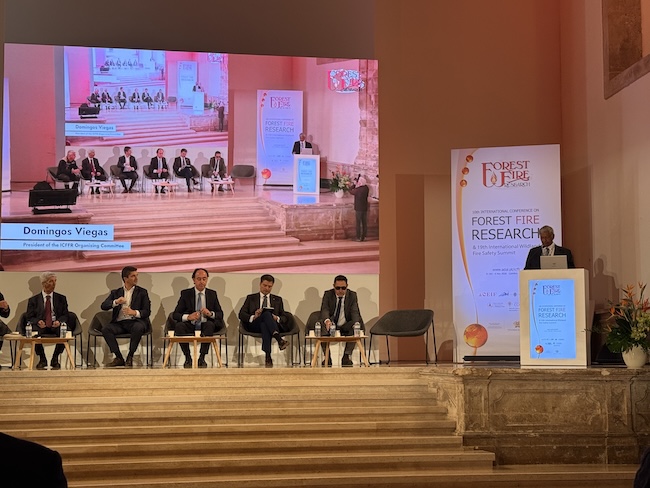
Na svečanom otvaranju, uz brojne uglednike iz različitih portugalskih ministarstava, grada Coimbre i Sveučilišta u Coimbri centralno mjesto je imao Prof. Domingos X. Viegas inicijator i predsjedavajući ove konferencije koja se održava već punih 40 godina (konferencija se održava svake 4 godine, a ovo je 10. konferencija).
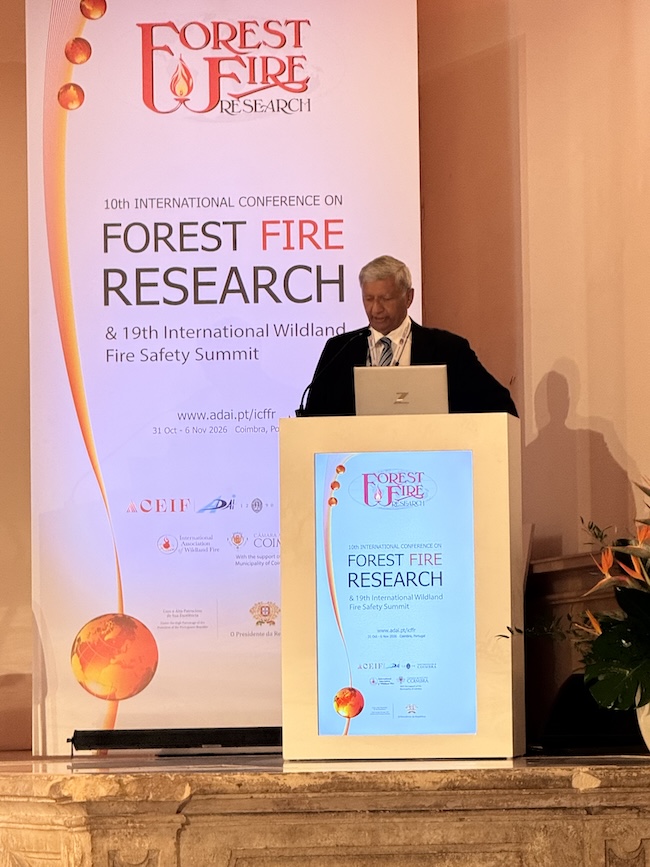
Prof. Viegas je održao i prvo plenarno predavanje: Analysis of oscillatory fire behaviour and the role of atmospheric structure
Short Summary: The research carried out by the author and his team during the past years has highlighted the dynamic character of wildfire behaviour, derived from the interaction between the fire and its surrounding atmosphere. One interesting property of the temporal evolution of the rate of spread (ROS) is its oscillatory character in the whole range of fire dimensions, related to the dynamic behaviour of fire. The amplitude and frequency of ROS oscillations depend on the boundary conditions of the fire, namely on its dimensions. In certain conditions, as in the case of eruptive fires in canyons, or junction fires, the fire may undergo a great acceleration, followed by a deceleration that have great impact in fire safety and fire management. These processes are well described by the mathematical model for fire acceleration induced by the surrounding flow. The pioneer work that is carried out by the author and his team on the fire spread in a thermally stratified boundary layer at laboratory scale confirms the need to consider the interaction between the fire and the surrounding flow and underscores the relevance of including the atmospheric stability as a parameter in the analysis and modelling of large wildfires.
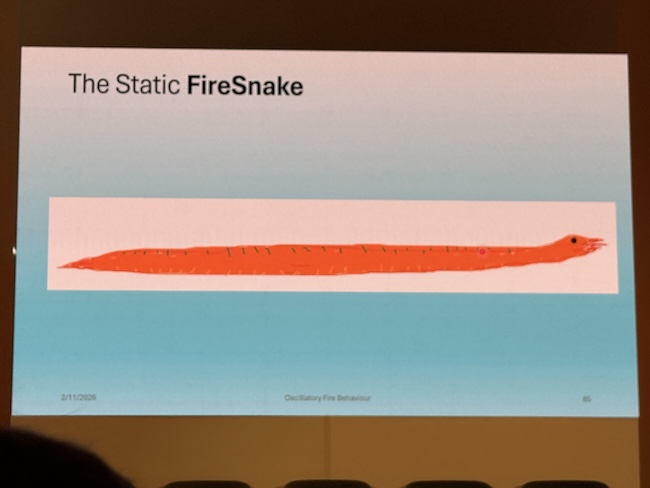
Pri kraju predavnja prof.Viegas je požar raslinja usporedio s kretanjem zmije. Statički požar bez vjetra na ravnoj podlozi je kao ispružena zmija.
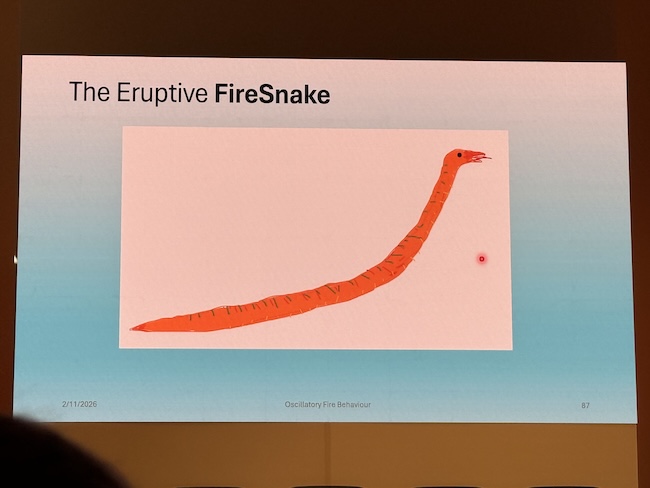
Uz nagib ili vjetar požar se može kretati eruptivno ...
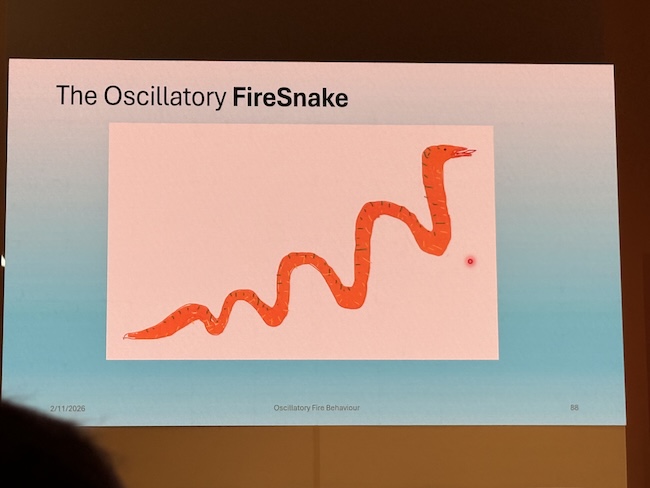
ali i oscilatorno, najprije se ubrza, pa uspori, ali je ipak sve brži i brži ...
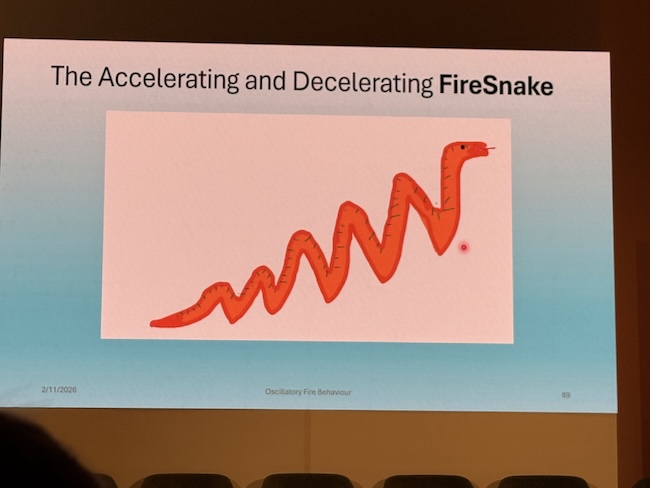
uz to često i naglo ubrzavajući i usporavajući. Objasniti ove promjene u brzini širenja požara raslinja su centralni znanstveni interes prof.Viegasa poslijednjih par godina. Zanimljivost ove konferencije je ta da ovdje znanstveni iznesu ono čime se bave poslijednjih godina.
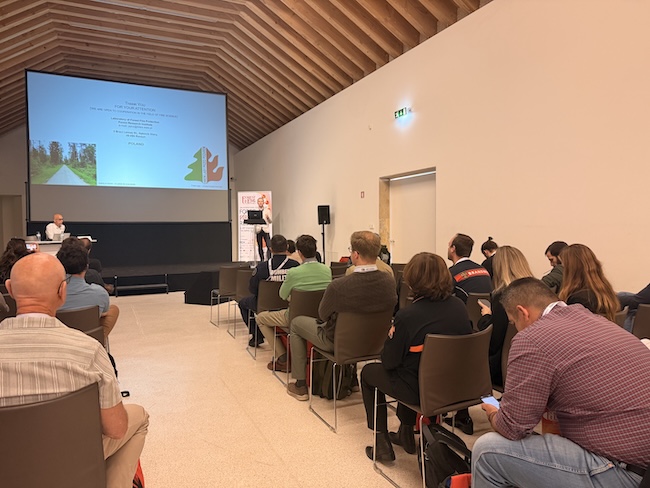
Radni dio konferencije se odvija 4 dana paralelno u 5 sala od 9 ujutro do 17 sati popodne.
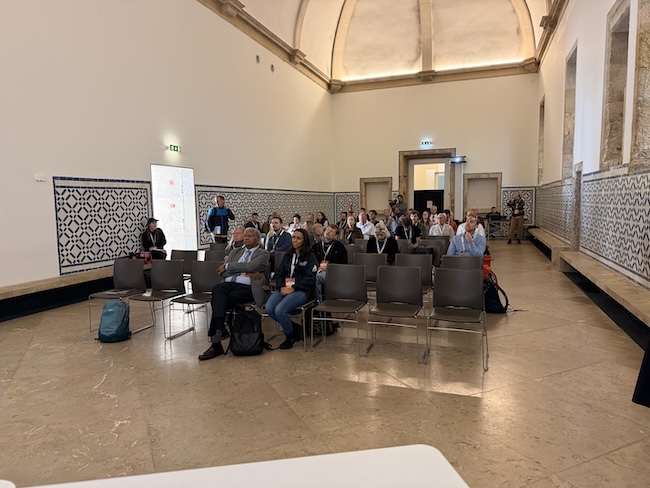
Najveći problem je bio taj u kojoj prostoriji biti i koja predavanja slušati ...
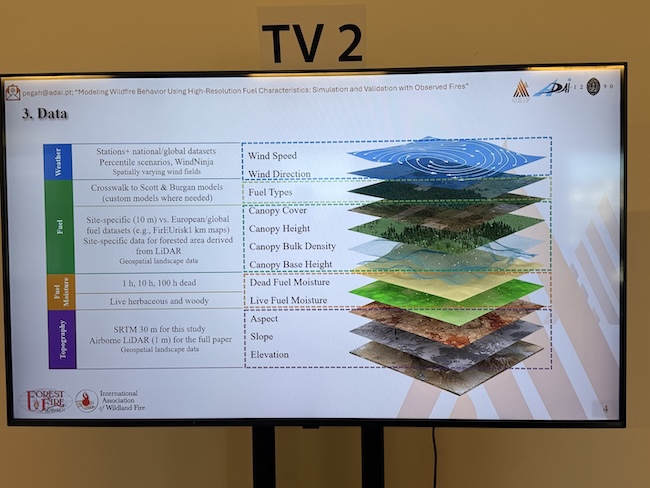
Uz predavnja važni dio konferencije je bila i poster sekcija koja ove godine nije bila u tiskanom obliku postera, već su se posteri vrtili na velikim TV ekranima.
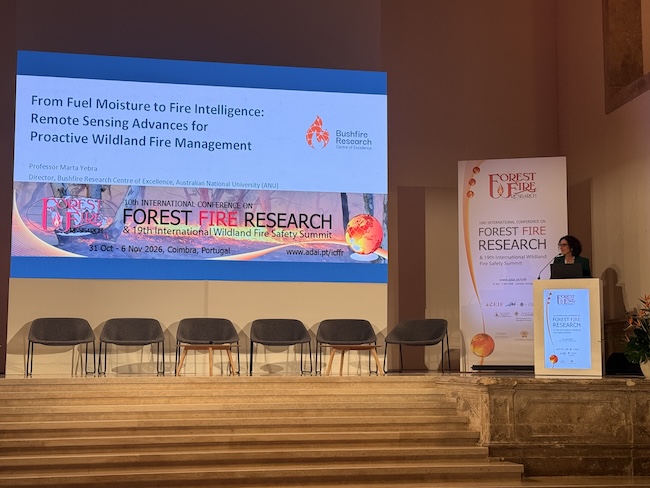
Od oistalih plenarnih predavanja istaknimo predvanje Marte Yebra, Australia, Bushfire Research Centre of Excellence. The Australian National University: From fuel moisture to fire intelligence: remote sensing advances for proactive wildland fire management
Short Summary: Understanding the condition of vegetation fuels is central to anticipating wildfire behaviour and supporting effective fire management. In recent years, advances in remote sensing and modelling have significantly improved our ability to monitor fuel moisture and other key fuel properties across landscapes. This keynote will present recent progress in estimating vegetation fuel moisture and related fuel characteristics using Earth observation data, machine learning and processbased approaches. These developments are enabling new capabilities for monitoring fuel flammability, anticipating periods of elevated fire risk, and informing fire management decisions. Beyond their direct application to fire behaviour and risk assessment, improved information on fuel conditions can also guide the development and deployment of other firemanagement technologies, including ignition detection systems, fire spread simulations and decisionsupport tools. The presentation will discuss how integrating satellite observations, modelling and emerging sensing technologies can contribute to a more proactive approach to living with fire in the age of megafires.
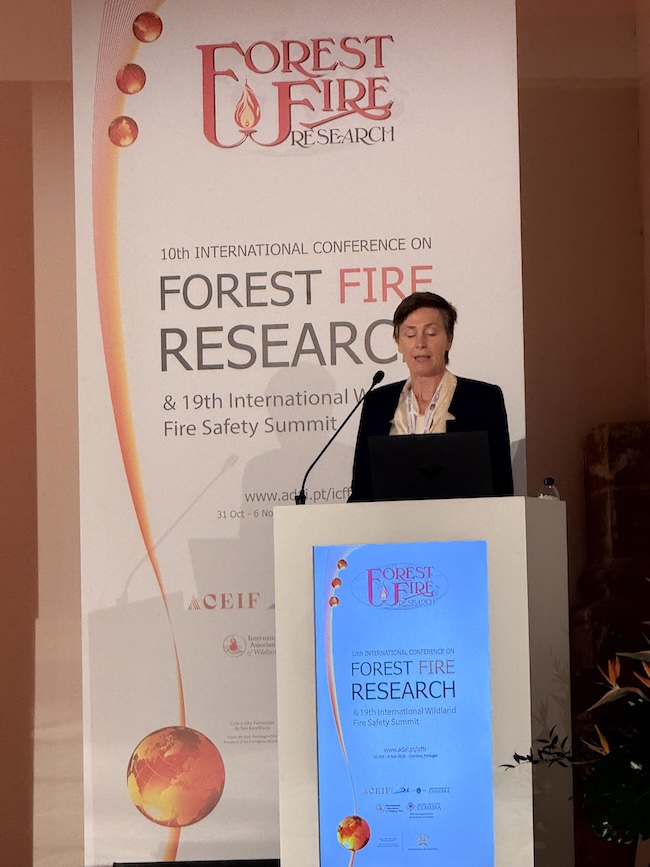
Sally Archibald, South Africa, University of the Witwatersrand, Why large extreme fires are like elephants, and what we can do about it, Short Summary: Fires have burned on Earth ever since terrestrial plants evolved and provided a source of fuel and oxygen. Current fire regimes are the result of constraints imposed by rates of fuel buildup and ecosystem flammability, with more intense fires found in places with longer fire return periods. However, global patterns of wildfire are changing in response to both the biophysical and the biological impacts of human activities. Attempts to tame wildfire have often resulted in perverse and undesired outcomes, yet there is growing consensus that living on a fiery planet requires engaging in prescribed fire and in fire management across a range of biomes and fire regimes. Here I address these issues from three perspectives. First, I describe the biophysical controls of wildfire, and the complexity of understanding percolation, fire spread, and powerlaw distributions. Second, I discuss why extreme wildfires are like elephants, and contrast “the elephant problem” with “the extreme wildfire problem”. Finally, I explore what managing wildfire means in terms of our engagement with risk, and propose some constructive ways forward for living with wildfire.
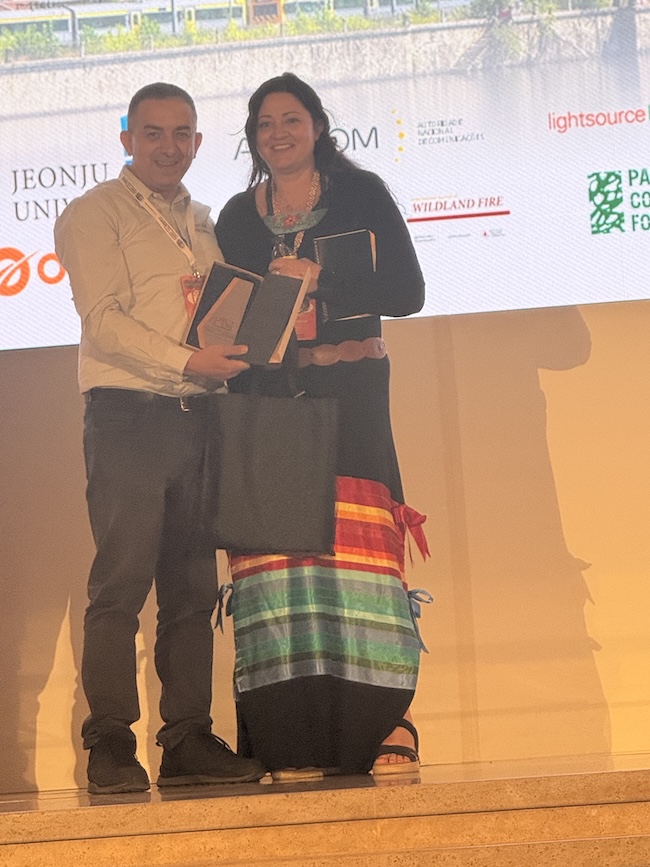
Amy Cardinal, Canada, Indigenous Leadership Initiative, Reignition: the urgent case for Indigenous and local leadership in fire
Short Summary: Amy will present the researchbased rationale for transitioning from prioritizing global strategies to funding local action to tackle the escalating wildfire crisis. She will highlight the success of Indigenous Fire Guardian programs, where local people are employed by their communities to work in sustainable, yearround positions to create healthy, fireadapted landscapes in their territories.
Lijevo je Luís Mário Ribeiro, su-predsjedavajući konferencije, čovjek koji je zaslužan za cjelokupnu organizaciju.
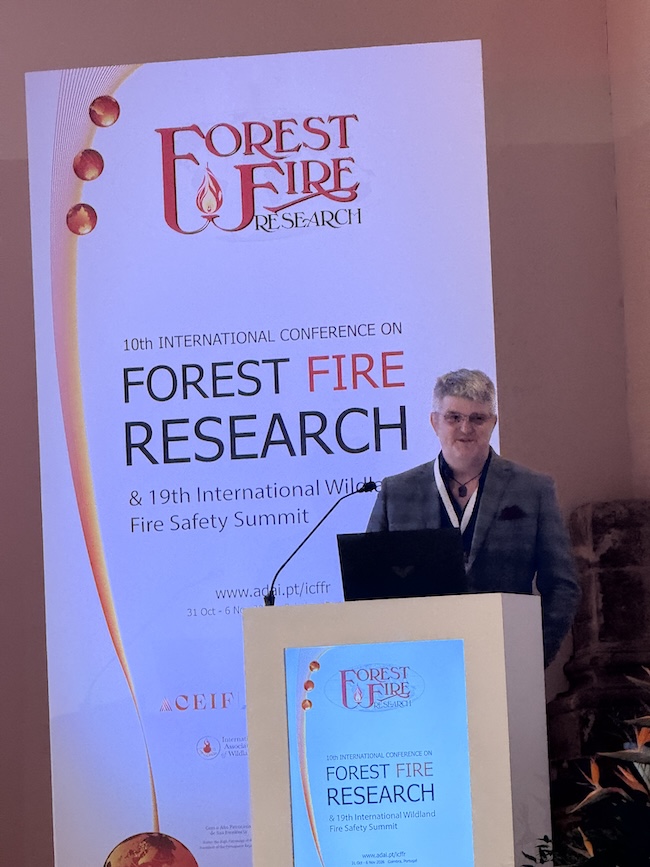
W. Matt Jolly, United States of America, US Forest Service, Challenging assumptions and leveraging new knowledge to reframe the future of wildland fire intelligence
Short Summary: As the world struggles to adapt to increasingly complex and destructive wildland fires, the need for more sophisticated fire danger and behavior tools has never been clearer. This keynote challenges conventional assumptions regarding live fuels and their role in wildland fire behavior. We introduce a novel, mechanistic modeling approach that predicts live fuel moisture by analyzing carbon and water variations in foliage. This new understanding offers a critical opportunity to reevaluate how live fuels are represented in decision support systems, providing a framework to integrate ecosystem dynamics and weather for a more comprehensive understanding of wildfire hazards. We will demonstrate how incorporating this new knowledge into fire danger rating systems, combined with wildfire hazard and vulnerability assessments, can enable the development of 'impactsbased' fire risk models and maps. This will deliver more actionable and precise forecasts for scientists and fire managers alike. Finally, we will explore how to better align model outputs with various wildland fire management decisions, ensuring information is both useable and actionable. Ultimately, these advancements will empower more informed decisionmaking and build greater resilience in the face of escalating worldwide wildfire threats.
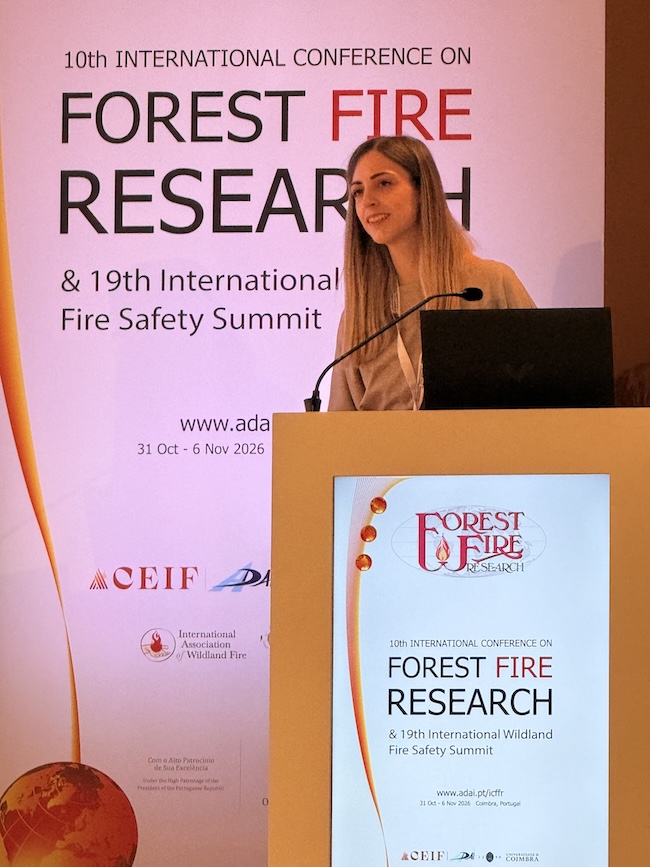
- Od prezentacija suradnika CIPOP-a imam slike samo dva predavača: Antonia Ivanda, Fire Weather Index and Machine Learning Approaches for Distinguishing Large Wildfire Events from Contained Interventions
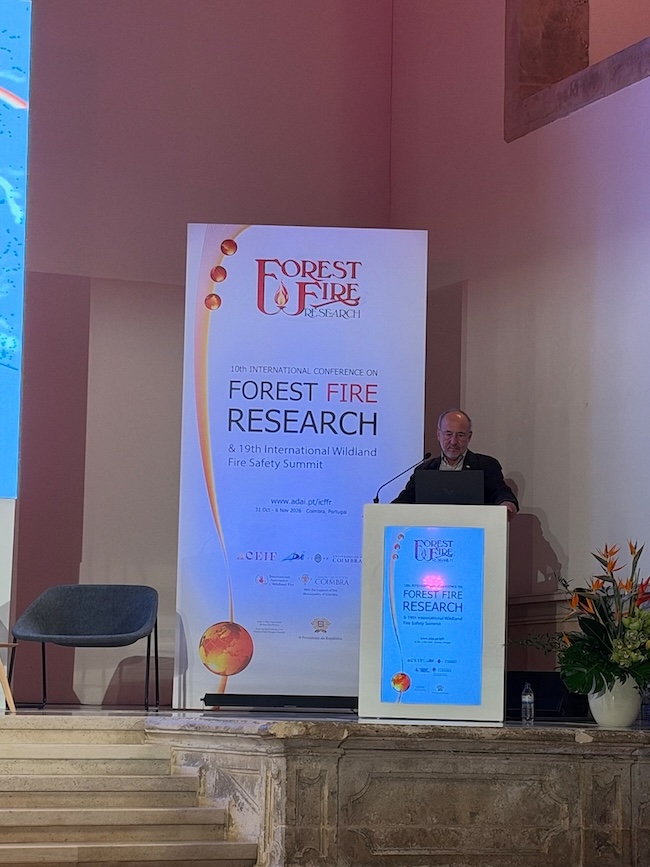
Darko Stipaničev, Canyon Detection for Eruptive Fire Early Warning System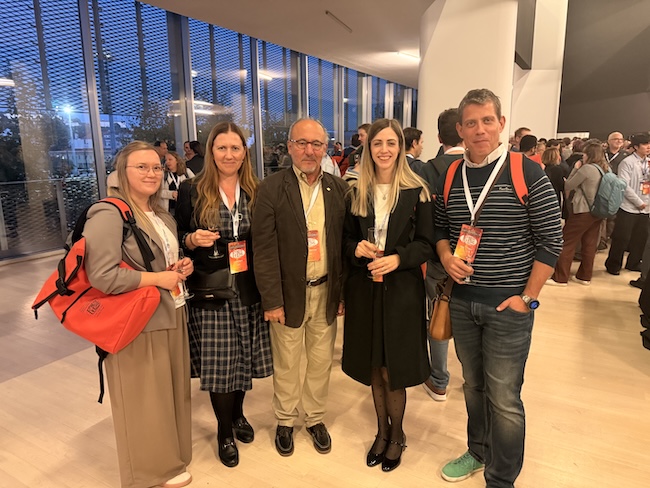
Mala (ali važna) ekipa iz Hrvatske: Jasmina Dobranić (DHMZ), Ljiljana Šerić, Darko Stipaničev, Antonia Ivanda i Marin Bugarić (svi sa FESB-a).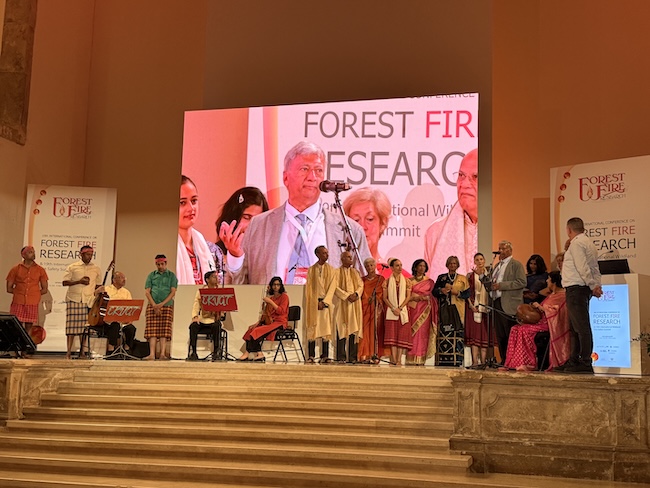
Osim znanstvenog programa impresivan je bio nastup folklorne skupine iz Goe Indija. Prof. Viegas je podrijetlom iz Goe, nekadašnje portugalske kolonije, ali je vrlo rano došao u Portugal. Glazbenici i plesaći iz Goe su nam bar malo približili tu zanimljivu indijsku pokrajinu.
Završno zatvaranje kongresa:
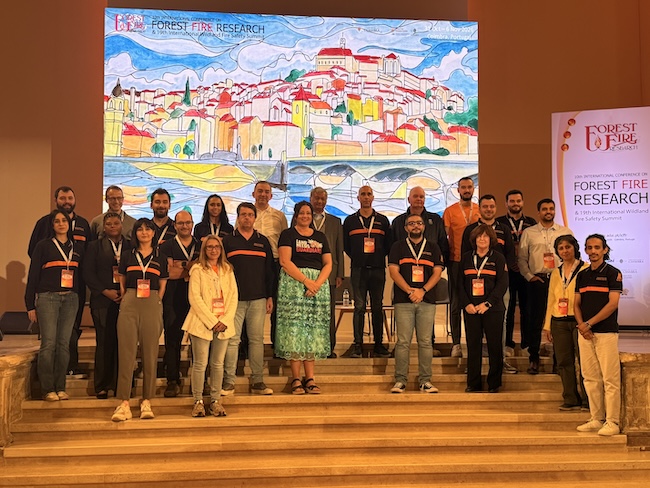
U završnom dijelu konferencije predstavili su se svi zbog kojih je konferencija bila uspješna. Za to je bio zadužen tim CEIF/ADAI - University of Coimbra, Portugal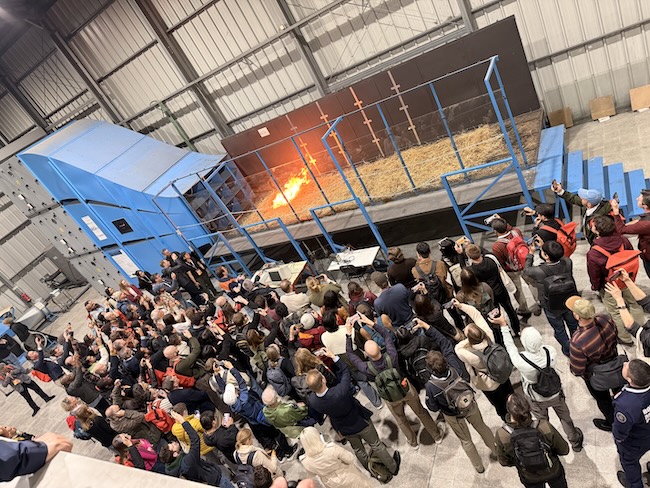
Važan dio konferencije je i studijski posjet laboratoriju prof.Viegasa. U njemu smo bili tijekom svake konferencije (reportaža iz 2022.)
Najnovija oprema - tunel na tri razine za istraživanje međutjecaja požara i atmosfere. U svakom verikalnom sloju može se regulirati ne samo brzina strujanja zraka, već i temperatura i vlaga:
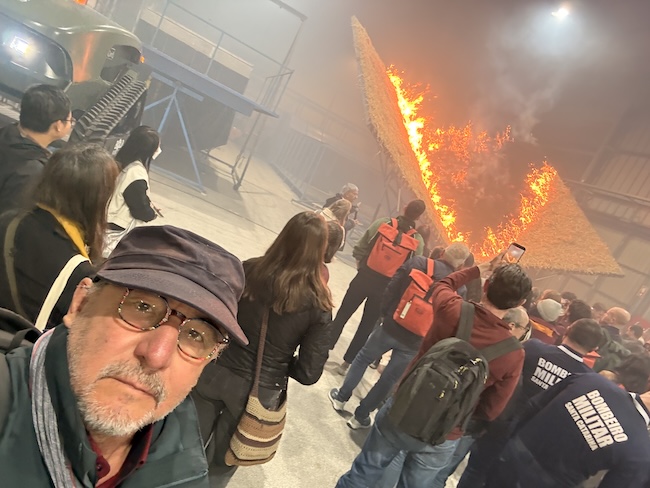
Demonstracija širenja požara u kanjonu, što je i bila tema moje ovogodišnje prezentacije.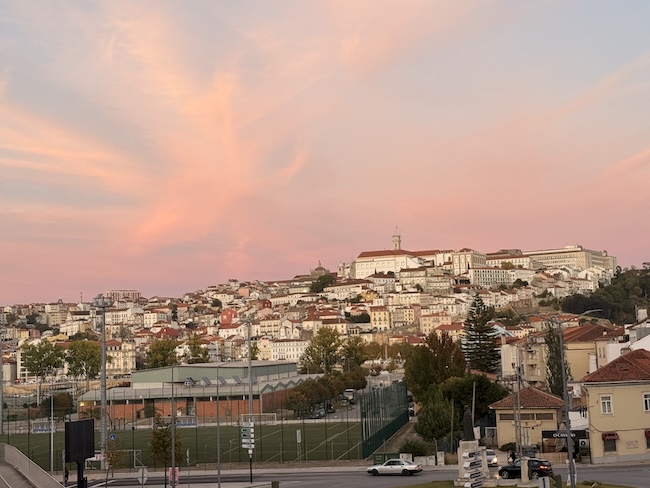
I na kraju spomenimo da je Sveučilište u Coimbri jedno od najstarijih sveučilišta u Europi i najuglednije Sveučilište u Portugalu. Svake se godine na prijemni ispit prijavi nekoliko puta više studenata nego što ima upisnih mjesta. Studirati u Coimbri je znak prestiža, ...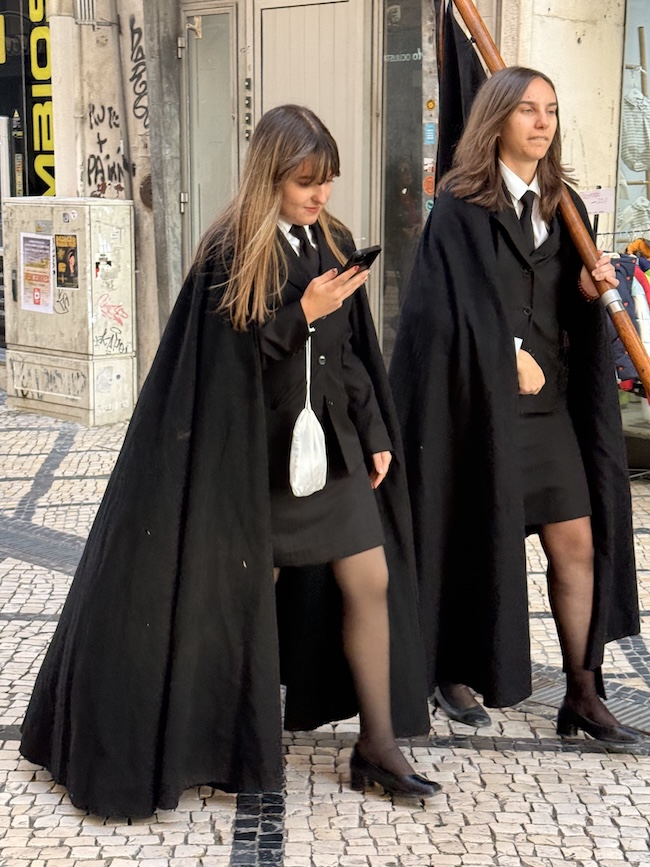
a prestiž se naglašava i odjećom studenata. Ovo je svećana odjeća studenata u Coibri koju nose prilkom bilo kojeg značajnijeg događanja ...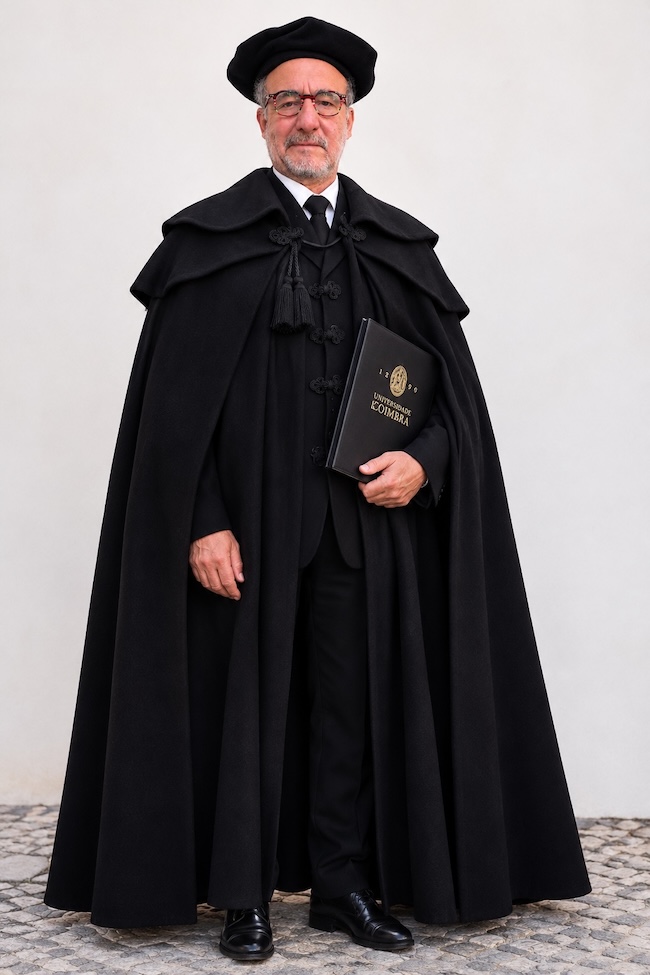
Naravno svečane odore nose i profesori. Kako tijekom šetnje Coimbrom nisam sreo niti jednog profesora u svečanoj odori, poigrao sam se sa AI i pokušao rekonstruirati kako bih ja izgledao da sam profesor na Sveučilištu u Coimbri. Pristaša sam ovakvog formalnog načina odjevanja. Mislim da bi svi, i profesori i studenti, bili ozbiljnjiji kada bi se ovako formalno oblačili na predavanjima i da bi studenti sigurno manje prčkali po mobitelima, što mi je posebno smetalo tijekom zadnjih godina moje predavačke karijere.
I na kraju kratke filmove o pojedinim danima konferencije možete pronaći na slijedećim poveznicama:
1 dan - https://www.facebook.com/share/v/1J7Um82h5A/
2 dan - https://www.facebook.com/share/v/19iL3z2vdq/
3 dan - https://www.facebook.com/share/v/1EjXrPt6DS/
4 dan - https://www.facebook.com/share/v/1CfyGyqB5r/
5 dan - https://www.facebook.com/share/v/19sfTNuiZQ/
6 dan - https://www.facebook.com/share/v/1HmDBSg4Va/
